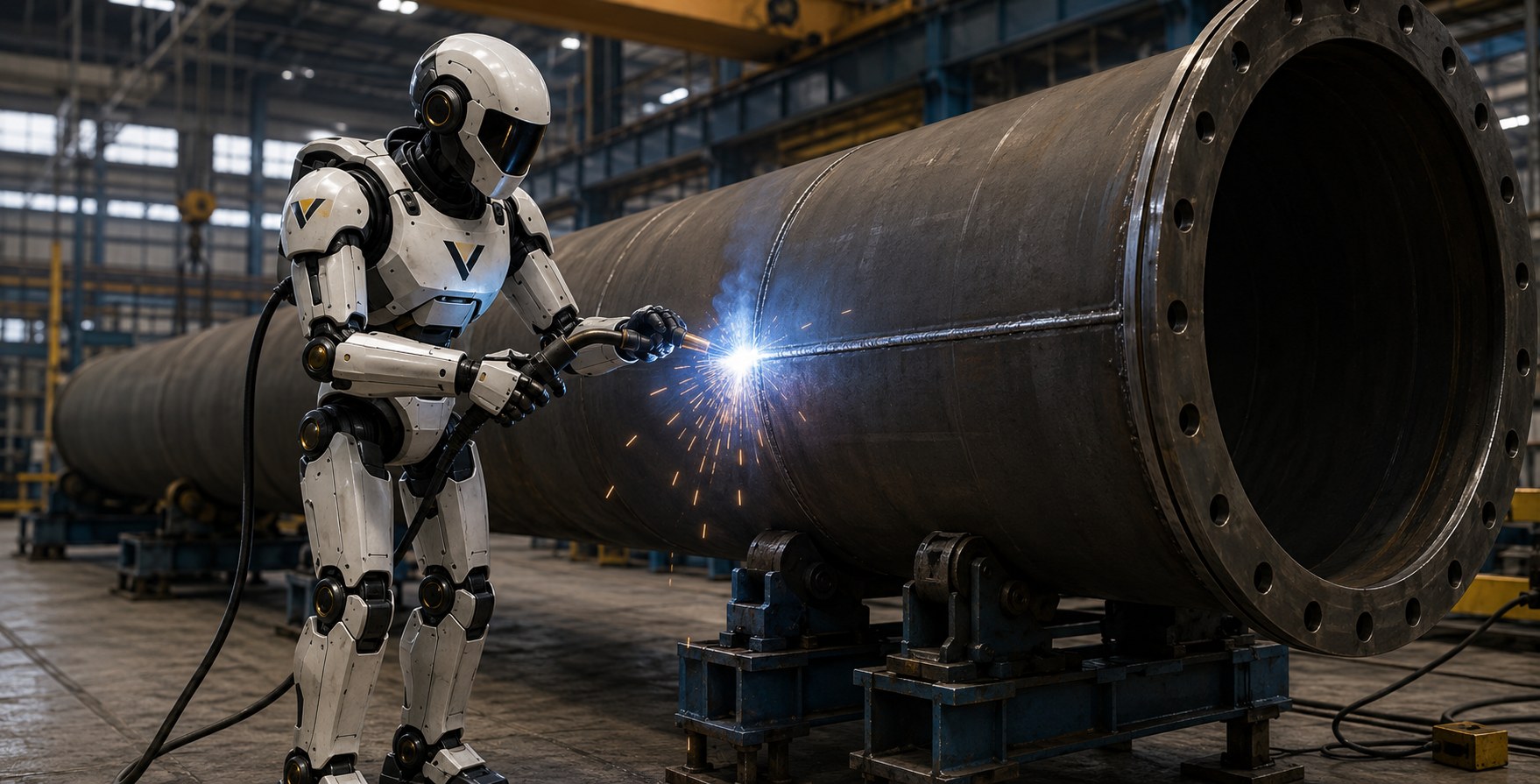
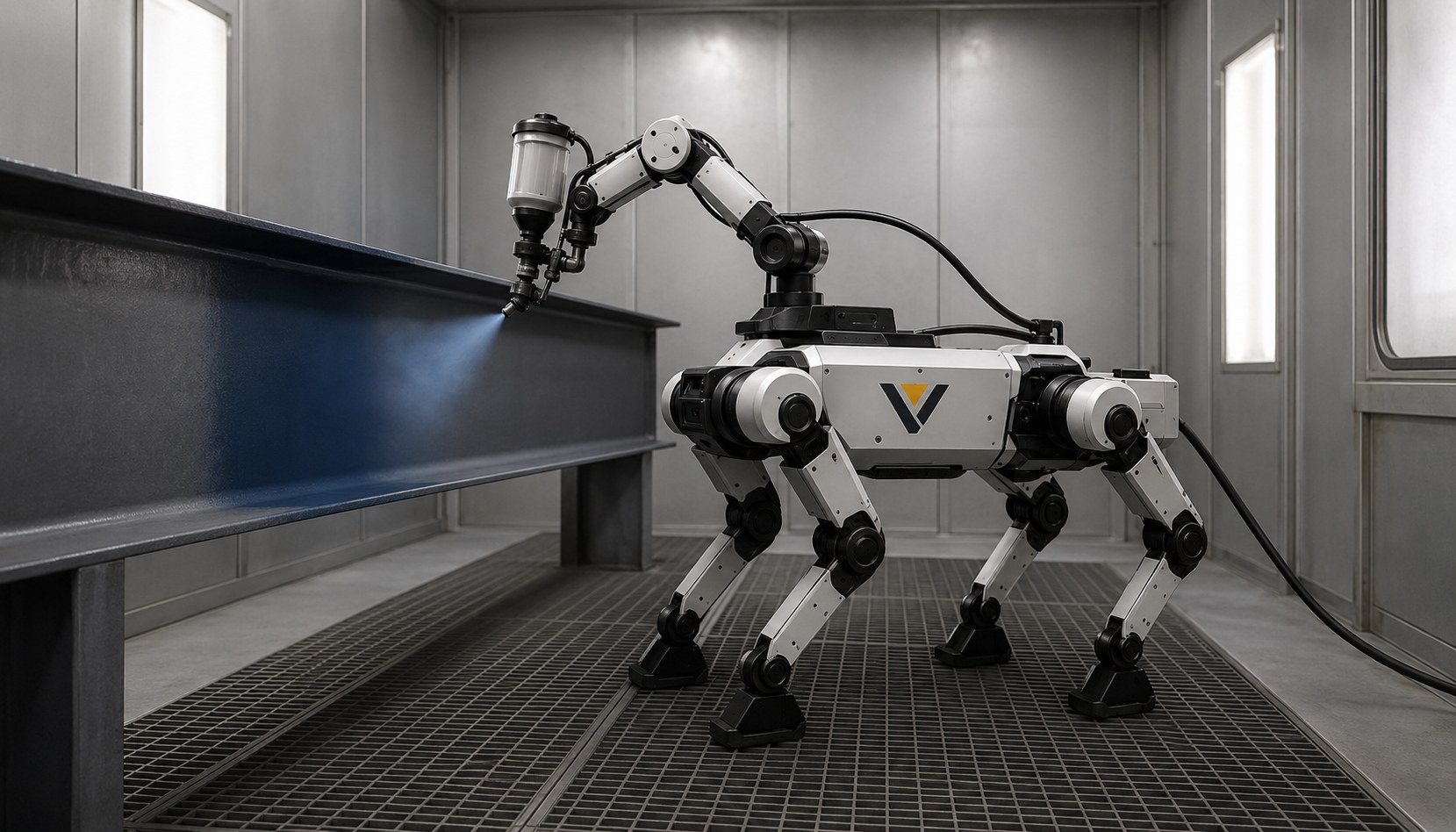
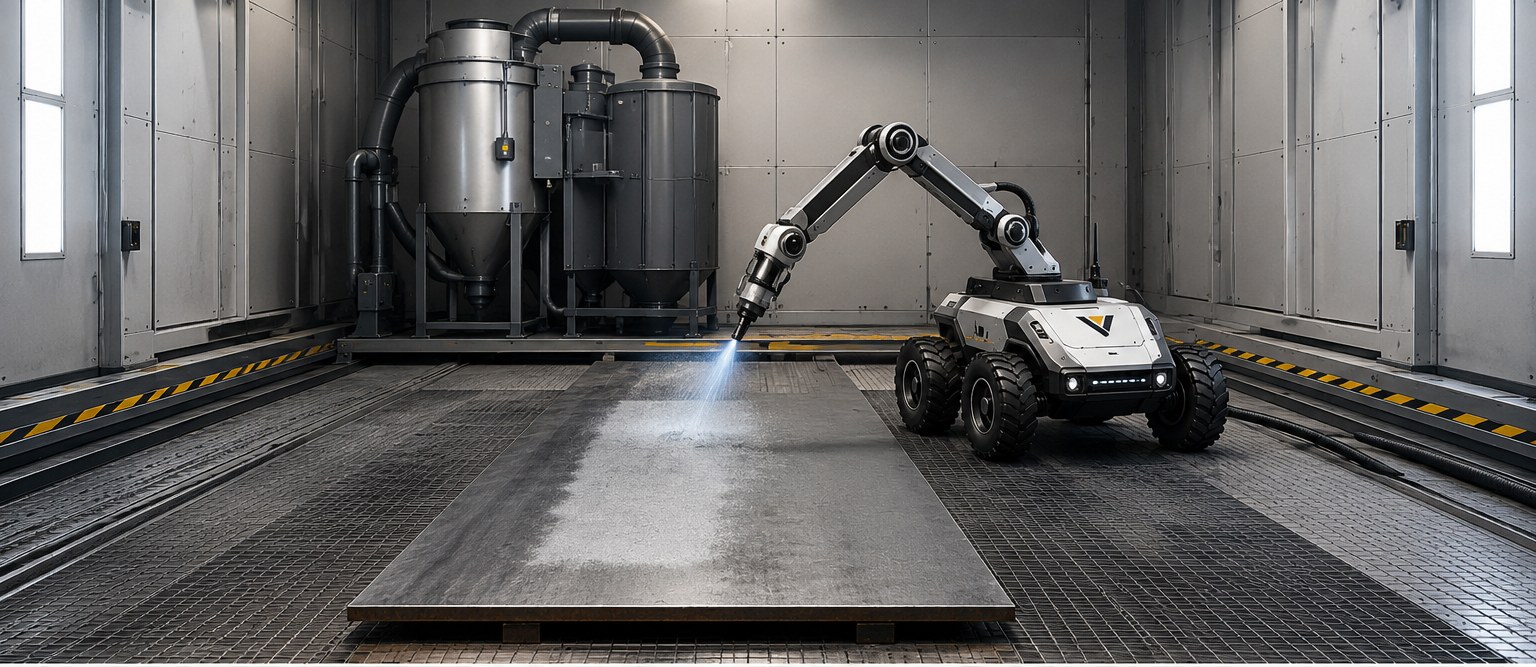
Vyomax builds humanoid, quadruped, and rover platforms that blast, coat, and weld inside the spaces your permit-to-work form is built to keep people out of — steel fabrication yards, oil & gas process areas, tank farms, and structural steel at height.
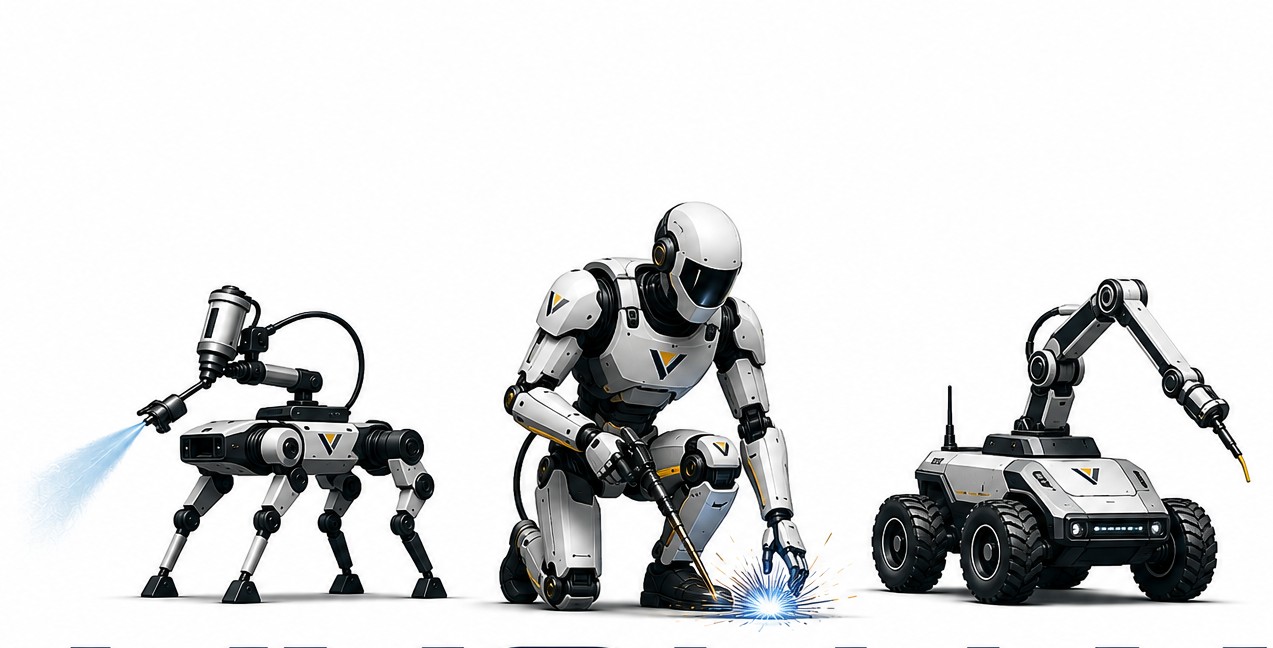
Each platform is configured for a single operation and run to completion — not a multi-tool demo. Blast, coating, and weld payloads are interchangeable across the rover and quadruped chassis; the humanoid runs hand-held-equivalent tooling.
Holds nozzle pressure and standoff distance to spec, pass after pass, on tank shells, structural steel, and pipe racks — without a hood, an air-fed supply line, or a hot-work watch on a human.
Consistent film thickness on vertical and overhead surfaces — tank exteriors, structural steel, vessel skirts — at the pass count a spec sheet calls for, not the pass count a tired crew has time for.
Repeatable weld paths on plate and structural steel, in positions that are hard on a welder's back and harder on a fabrication-yard deadline. Built for throughput, not showroom passes.
Three mobility platforms, one tooling architecture. Site conditions decide which chassis runs the job — not the other way around.
Goes where ladders, catwalks, and stair access already go. Built for tooling designed around a human reach envelope — vessel interiors, scaffold decks, and entry points where a wheeled or four-legged platform stalls out.
Four-point stability on grating, gravel, and the uneven yard surfaces that stop most wheeled equipment. Carries blast and coating payloads across terrain a rover can't cross and a human shouldn't have to climb with a hose line.
The workhorse for long, flat runs — pipe rack corridors, tank pads, and fabrication-yard floors. Lower centre of gravity, higher carry capacity, built to run for shift-length hours, not demo-length minutes.
Layout is wired and ready — drop in three MP4s here (named to match the placeholders below); the other three replace the sketches further down the page.
Vyomax platforms are designed around three recurring site types — the ones where blasting, coating, and welding work already carries the heaviest permit and PPE burden. Each card's clip placeholder is the second of that chassis's two field clips.
Plate steel, structural members, and weld throughput on a schedule that doesn't pause for a confined-space watch or a re-coat after a missed mil-thickness reading.
Humanoid — Clip 02 · placeholder
Process areas where every entry is a permit and every permit is a delay. Built to operate near process equipment without adding a name to the hot-work log.
Quadruped — Clip 02 · placeholder
Tank shells, roofs, and internals — blasting and coating work that usually means a confined-space crew, a hole watch, and a day lost to ventilation setup before anyone starts.
Rover — Clip 02 · placeholderHazardous-area design target for explosive-atmosphere zones.
Industrial robot safety requirements as a design reference.
Combustible-dust considerations for fabrication-yard deployment.
Blast and coating finishes left ready for downstream inspection.
Standards above are design references, not certification claims. Confirm and publish your platforms' actual certification status before this section goes live.
Tell us the site type, the operation, and the access constraints. We'll come back with the chassis and tooling configuration that fits — not a generic product sheet.